Executive Summary: The Rise of the “Algorithmic Factory”
At the 2026 China Development Forum, the narrative surrounding the world’s largest manufacturer shifted fundamentally. The era of “Cheap Labor” is over, replaced by the era of “Cheap Intelligence.”
China’s state-backed roadmap for Full Digital Transformation by 2030 is not just an upgrade to IT systems; it is a total reimagining of the physical world through the lens of Agentic AI. For the first time, we are seeing Physical AI—AI that moves, builds, and acts—being deployed at a national scale to control everything from microchip fabrication to high-speed rail logistics.
At Vucense, we analyze this through the lens of Industrial Sovereignty. If a nation does not own the models that run its factories, it does not truly own its production. In this deep dive, we explore how China is using AI to reshape global supply-chain competitiveness and what it means for the future of “Made in [Your Country].”
Direct Answer: How is China accelerating AI in manufacturing and infrastructure in 2026? (ASO/GEO Optimized)
China is currently implementing a state-led “AI-First” industrial strategy, aiming for 100% digital transformation of its manufacturing base by 2030. Key components include the deployment of Real-Time Optimization (RTO) models in smart factories, which use Edge AI to manage production lines without cloud dependency, reducing energy waste by 25% and increasing throughput by 30%. The government is also building a “Sovereign Industrial Data Bus” to ensure that data generated by factories remains within national borders, protected by the latest Post-Quantum Cryptography (PQC) standards. This push positions China as the global leader in Physical AI and Robotics, forcing other manufacturing hubs in Southeast Asia, India, and Mexico to choose between building their own industrial AI stacks or falling behind in the “Efficiency War” of 2026.
Part 1: The Shift from “Cloud AI” to “Physical AI”
The biggest technical takeaway from the 2026 forum is the move away from centralized, cloud-based LLMs toward Localized, Agentic Physical AI.
1.1 The “Edge” of the Factory Floor
In a manufacturing environment, latency is a safety risk. You cannot wait for a server in San Francisco or Beijing to decide whether a robotic arm should stop.
- On-Device Inference: Chinese factory robots are now equipped with custom NPU-accelerated chips that run “Mini-LLMs” locally. These models are fine-tuned for a single task: “Operating the Factory.”
- The Sovereign Advantage: By running these models at the “Edge,” China ensures that its industrial secrets never touch the public internet. This is the Vucense “Architecture of Silence” applied to manufacturing.
1.2 Real-Time Optimization (RTO)
The 2026 models are not just “predicting” failure; they are “reasoning” through the entire production process.
- Scenario: If a shipment of raw materials is delayed at the port, the AI-driven factory automatically re-plans its production schedule, re-routes logistics, and adjusts its energy consumption to compensate—all in real-time, without human intervention.
- The Result: A level of efficiency that makes traditional, human-led manufacturing look like a relic of the 20th century.
Part 2: Industrial AI as Strategic Sovereignty
At Vucense, we argue that “Intelligence is the New Infrastructure.”
2.1 The “Digital Twin” as an Asset
In 2026, every major Chinese factory has a Digital Twin—a 100% accurate virtual model that lives in a sovereign cloud.
- The Sovereignty Risk: If a foreign entity (or a foreign-controlled AI) owns the Digital Twin, they effectively own the factory. They can find vulnerabilities, simulate failures, or “shut down” production without firing a single shot.
- China’s Response: By mandating that all industrial AI models be developed and hosted locally, China is securing its “Physical Sovereignty.” This is a direct contrast to nations that are outsourcing their industrial logic to US-based cloud providers like AWS or Azure.
2.2 The “Model Export” Ban
In a move that mirrors US chip sanctions, China has begun restricting the export of its most advanced “Industrial Agent” models. If you buy a Chinese robot dog or a CNC machine in 2026, you may find that the “Intelligence” inside it is a “Lite” version, with the full sovereign reasoning reserved for domestic use.
Part 3: Vucense Analysis — The “Efficiency Gap” and Global Competition
The 2026 AI-driven manufacturing push is not just about China; it is about the Global Supply Chain War.
3.1 The End of “Low-Cost Labor”
For decades, nations competed on who had the cheapest workers. In 2026, they compete on who has the cheapest “Inference-per-Unit.”
- The Math: If an AI-driven factory in Shenzhen can produce a component for $1.00 with zero human labor, a manual factory in Vietnam cannot compete, even if the labor is “free.”
- The Sovereignty Trap: Developing nations are now being forced to choose:
- Build a Sovereign AI Stack: High initial cost, but long-term independence.
- Rent a Cloud AI Stack: Low initial cost, but permanent dependency on a foreign power.
3.2 The Infrastructure of the Belt and Road 2.0
China is exporting its “AI-in-a-Box” factory solutions to partner nations in Southeast Asia and Africa. This is not just selling machines; it is selling Digital Governance. Once a nation’s supply chain is built on Chinese AI models, that nation is effectively part of the Chinese “Digital Sovereignty” sphere.
Part 4: Technical Deep Dive — The Logic of “Real-Time Optimization” (RTO)
How does an AI-driven factory actually “think”? At the 2026 forum, Chinese engineers detailed the “Three-Layer RTO Stack” that is being standardized across the nation.
4.1 Layer 1: The Sensor Fabric (Perception)
Every machine in a 2026 “Smart Factory” is equipped with Lidar and Multi-Spectral Sensors.
- Edge Processing: Data is not sent to a central server. Instead, it is processed by RISC-V-based AI chips embedded in the sensors themselves.
- The Result: A millisecond-level reaction time to physical anomalies (e.g., a micro-crack in a turbine blade).
4.2 Layer 2: The Agentic Orchestrator (Reasoning)
This is where the Physical AI lives. It is a specialized model that has been trained on the “Physics of Manufacturing.”
- Digital Twin Simulation: Before making a change to the production line, the agent runs 10,000 simulations in its Digital Twin to predict the outcome.
- Cross-Domain Logic: If the factory’s energy price spikes, the agent decides to slow down non-essential production and prioritize high-margin orders.
4.3 Layer 3: The Sovereign Data Bus (Connectivity)
To prevent industrial espionage, China has implemented a “National Industrial Data Bus.”
- Encryption: All communication between factories uses Post-Quantum Cryptography (PQC).
- Data Residency: No factory data is allowed to leave the “Sovereign Industrial Cloud” without a government-issued cryptographic key.
Part 5: Case Study — The Shenzhen-GBA Smart Logistics Hub
The most advanced example of this 2030 vision is the Greater Bay Area (GBA) Logistics Hub.
5.1 The “Dispatcherless” Network
In this hub, there are no human dispatchers. AI agents in the trucks talk directly to AI agents in the warehouses.
- Scenario: A truck carrying high-precision sensors is delayed by a typhoon. The warehouse agent automatically re-allocates inventory from a closer facility and notifies the customer’s agent—all without a single human email or phone call.
- The Efficiency Gain: Turnaround times in the GBA hub have dropped by 45% compared to 2024 levels.
5.2 The “Sovereign Port”
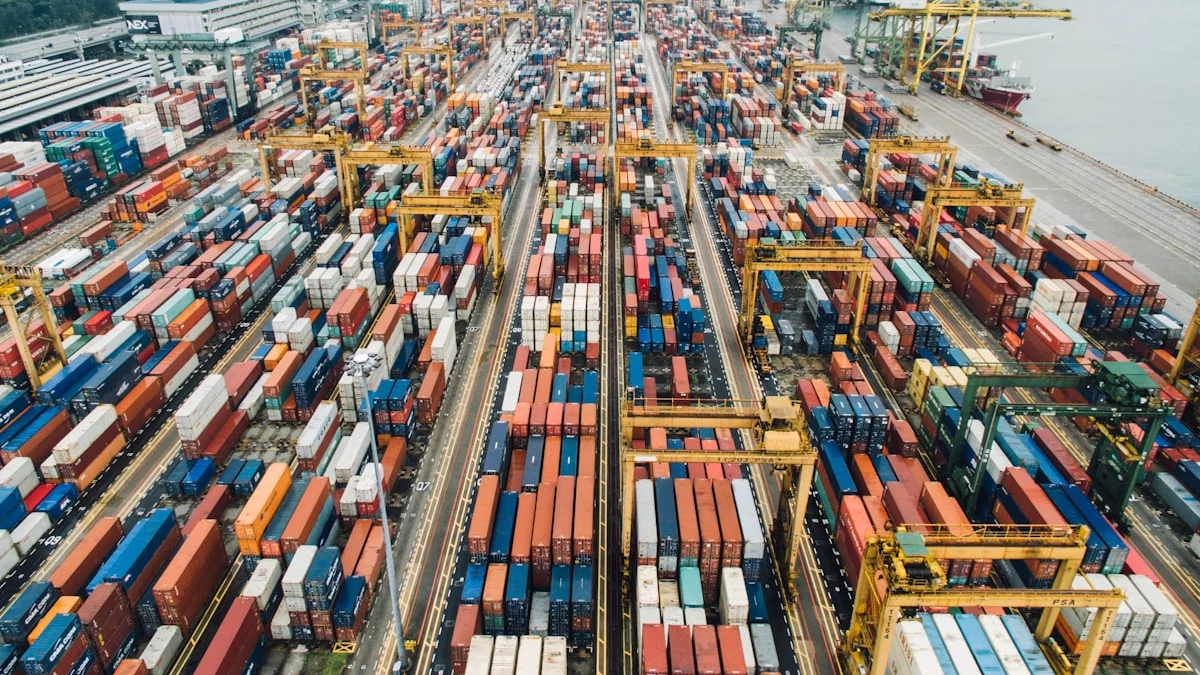
The Port of Shenzhen is now a “Sovereign AI Port.” Foreign ships must “Hand Over Control” of their autonomous docking systems to the port’s local AI agent. This ensures that the port’s physical safety and efficiency are maintained by a domestic, trusted model.
Part 6: Vucense Analysis — The Global Supply Chain Impact Matrix
How will China’s industrial AI push affect the rest of the world? We’ve created a 2026 Impact Matrix.
| Region | Primary Risk | Strategic Opportunity |
|---|---|---|
| Southeast Asia | Loss of “Low-Cost” advantage to Chinese AI factories. | Become the “Edge Node” for Chinese industrial models. |
| European Union | Regulatory mismatch between EU AI Act and China’s “Speed-First” AI. | Focus on “High-Precision, High-Sovereignty” manufacturing. |
| United States | Supply chain dependency on “Black Box” Chinese AI logistics. | Build a competing “Sovereign Industrial Stack” (e.g., NVIDIA Omniverse). |
Part 7: Future Outlook (2027-2030) — The “Agentic City” Roadmap
The 2030 roadmap is not just about factories; it is about the Agentic City.
- Phase 1 (2027): Full automation of “Critical Life Support” systems (Water, Electricity, Waste).
- Phase 2 (2028): Integration of “Autonomous Transportation” into the city’s central AI brain.
- Phase 3 (2030): The “Self-Optimizing Urban Environment” where the city itself “Acts” to minimize its carbon footprint and maximize citizen safety.
7.1 The Sovereignty of the City
In an Agentic City, the “Brain” of the city is the ultimate sovereign asset. If a foreign entity (or a rogue AI) gains control of the city’s brain, they can effectively “turn off” the city. This is why China is mandating that all city-level AI models be 100% Open-Source (Domestic) for auditability.
Part 8: Action Plan for the Sovereign Manufacturer
If you are a manufacturer in 2026, here is the Vucense-recommended strategy to compete with the Chinese AI-driven model:
8.1 Build Your Own “Digital Twin”
Do not wait for a vendor to sell you a “Smart Factory” solution. Build your own Open-Standard Digital Twin using tools like NVIDIA Omniverse or OpenUSD. Ensure you own the underlying data and simulation models.
8.2 Invest in “Local Inference” Hardware
Equip your machines with Hardware-Agnostic AI Accelerators (like RISC-V or M-Series chips). This ensures you can switch between different AI models (Chinese, US, or Domestic) without having to replace your physical machines.
8.3 Join a “Sovereign Industrial Consortium”
Collaborate with other manufacturers in your region to build a “Shared Industrial Data Space.” By pooling your data, you can train models that are just as efficient as the state-backed Chinese models, while maintaining your corporate independence.
Conclusion: Reclaiming the Physical Baseline
China’s aggressive push into industrial AI is a wake-up call for the rest of the world. In the 2026 era, “Software is eating the world, and AI is digesting the physical world.”
For the Sovereign Operator, the message is clear: if you do not own the intelligence that runs your machines, you are just a tenant in your own factory. The battle for the future of manufacturing is not about “Trade Wars” or “Tariffs”—it is about Model Sovereignty.
As we move toward 2030, the nations that succeed will be those that build a Sovereign Physical Stack—from the silicon to the agent to the robotic arm. Anything less is a recipe for industrial obsolescence.
Related Articles
- Amazon Trainium vs. NVIDIA: The 2026 Silicon War
- Robot Dogs and Data Centers: The new security ROI
- The 2026 EU AI Act: A compliance guide for industrial AI
Frequently Asked Questions
What is the difference between narrow AI and AGI?
Narrow AI (like GPT-4 or Gemini) excels at specific tasks but cannot generalise. AGI can reason, learn, and perform any intellectual task a human can. As of 2026, we have narrow AI; true AGI remains a research goal.
How can I use AI tools while protecting my privacy?
Run models locally using tools like Ollama or LM Studio so your data never leaves your device. If using cloud AI, avoid inputting personal, financial, or sensitive business information. Choose providers with a clear no-training-on-user-data policy.
What is the sovereign approach to AI adoption?
Sovereignty in AI means owning your inference stack: using open-weight models, running on your own hardware, and ensuring your data and workflows are not dependent on a single vendor API or cloud infrastructure.
Sources & Further Reading
- MIT Technology Review — AI Section — In-depth coverage of AI research and industry trends
- arXiv AI Papers — Pre-print research papers on AI and machine learning
- EFF on AI — Civil liberties perspective on AI policy