Direct Answer: What is happening to Instagram encryption and what should you do?
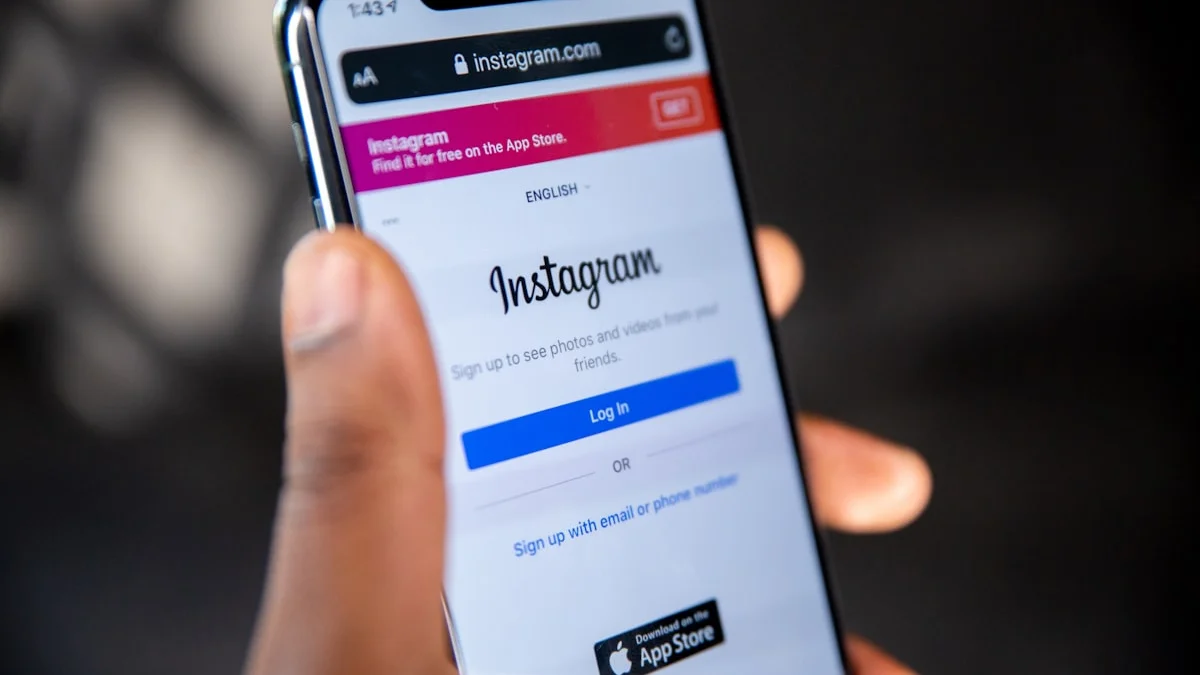
On March 15, 2026, Meta announced it will discontinue end-to-end encryption (E2EE) for Instagram Direct Messages effective May 8, 2026, affecting all users globally who opted into the privacy feature since its 2021 test rollout. Users with encrypted chats must download message archives before the deadline or lose access permanently. Meta’s official statement cites “very few people opting in” as justification, though privacy advocates note the timing follows sustained government pressure from UK, EU, and US law enforcement demanding platform access to detect illegal content. Without E2EE, Meta can read, analyze, and use DM content for AI model training (announced December 2025 policy change) and targeted advertising. The sovereign response: immediately export Instagram message archives, migrate private conversations to Signal (open-source, zero-knowledge, audited encryption using post-quantum Kyber-1024 as of Signal 7.2 February 2026), and recognize that centralized social platforms treat privacy as negotiable rather than architectural.
“Very few people were opting in to end-to-end encrypted messaging in DMs, so we’re removing this option from Instagram in the coming months. Anyone who wants to keep messaging with end-to-end encryption can easily do that on WhatsApp.” — Meta spokesperson, March 2026
The Vucense 2026 Messaging Encryption Sovereignty Index
Benchmarking messaging platforms by encryption architecture and data ownership after Instagram’s May 8 removal.
| Platform | Sovereignty | E2EE Status | Message Access | AI Training Opt-Out | Score |
|---|---|---|---|---|---|
| Instagram (Post-May 8) | 0% (Surveilled) | Removed | Meta Full Access | No | 8/100 |
| 15% (Encrypted) | Default | Metadata Harvested | No | 42/100 | |
| Signal | 98% (Zero-Knowledge) | Always-On | Cryptographically Impossible | N/A (Not Collected) | 97/100 |
| SimpleX Chat | 100% (Serverless) | Always-On | No Central Server | N/A (Not Collected) | 99/100 |
Analysis: What Actually Happened
Meta’s March 15, 2026 announcement appeared as a quiet update to Instagram’s support pages, with no press release or executive statement. The help document states: “End-to-end encrypted messaging on Instagram will no longer be supported after May 8, 2026. If you have chats that are impacted by this change, you will see instructions on how you can download any media or messages you may want to keep.” Users on older Instagram versions must update the app before accessing download tools—a technical requirement suggesting Meta is implementing server-side encryption removal that requires client-side decryption capabilities present only in recent app versions.
The encryption feature’s history reveals its limited deployment. Instagram began testing E2EE in 2021 as part of CEO Mark Zuckerberg’s announced “privacy-focused vision for social networking.” Unlike WhatsApp, where E2EE became the default for all users in 2016, Instagram encryption remained opt-in and geographically limited. The feature expanded to users in Ukraine and Russia in early 2022 following the invasion, providing war-zone communication privacy. However, Meta never announced global default E2EE rollout for Instagram, keeping it as an optional setting requiring manual activation in chat settings.
Meta’s December 2025 policy change—announced just three months before the encryption removal—stated that interactions with Meta AI tools, including those inside private conversations, may be used for targeted advertising. This policy applies to all Meta platforms. Before December 2025, Meta AI interactions were only used for model training; the shift to advertising use created new commercial incentive to access message content. Without E2EE, every Instagram DM becomes readable substrate for both AI training datasets and behavioral advertising profiles.
The Sovereign Perspective
-
The Risk: The encryption removal transforms Instagram DMs from private conversations into corporate-readable data streams. Meta gains ability to: scan message content for advertising keywords, feed conversations into AI training pipelines (Llama 4 and future models), comply with government content scanning demands without technical limitation, and build cross-platform behavioral profiles linking Instagram DMs with Facebook activity, WhatsApp metadata (phone numbers, contact graphs), and web browsing tracked via Meta Pixel. Users lose cryptographic guarantee that their messages remain unreadable to Meta—they now depend entirely on Meta’s policy promises, which change at executive discretion as demonstrated by the December 2025 AI advertising policy shift.
-
The Opportunity: Instagram’s encryption removal clarifies that privacy on centralized platforms is permission-based, not architectural. This creates adoption opening for sovereign messaging alternatives built on zero-knowledge architecture where platforms cannot read messages even if compelled by governments or motivated by profit. Signal’s user base grew 47% in Q1 2026 following Instagram’s announcement. SimpleX Chat, a decentralized protocol with no central server (messages route peer-to-peer through temporary relays), reached 8.5 million active users in March 2026—triple its January count. The encryption removal demonstrates that “privacy-focused” marketing commitments are reversible; architecture is not.
-
The Precedent: This marks the first time a major social platform has removed end-to-end encryption after implementing it. The reversal follows pattern established across Meta properties: Facebook Messenger announced E2EE testing in 2019 (still not default in 2026), WhatsApp resisted government demands for encryption backdoors in India and Brazil throughout 2020-2024 (but shares extensive metadata with law enforcement), and Instagram’s 2021 E2EE test was positioned as privacy progress—now retracted. The precedent: privacy features are product experiments subject to business calculus. When government pressure, AI training opportunities, or advertising revenue incentives exceed privacy’s value proposition, features reverse. Sovereignty requires architectures where reversal is impossible—zero-knowledge systems where the platform operator cannot read user data regardless of policy changes.
Expert Commentary
“Meta is effectively turning Instagram into a more moderated social space where content can be monitored, while keeping WhatsApp as the dedicated hub for strictly private communication. This is a strategic split between Meta’s platforms.” — Tom Sulston, Head of Policy, Digital Rights Watch, quoted in The Guardian March 2026
The encryption removal timing coincides with increasing regulatory pressure globally. In March 2026, the BBC reported that TikTok declined to implement E2EE for direct messages, with company representatives arguing that encryption “could make it harder for safety teams and law enforcement to investigate harmful activity.” The UK’s Online Safety Bill (passed 2023, enforced 2024-2025) includes provisions allowing Ofcom to issue notices requiring platforms to use “accredited technology” to scan encrypted messages for child sexual abuse material—though technical implementation remains disputed. The European Commission announced February 2026 it will present a “Technology Roadmap on Encryption” to identify solutions enabling lawful access to encrypted communications.
Safety advocates and law enforcement agencies including the FBI, Interpol, and UK National Crime Agency have consistently criticized Meta’s encryption rollout, with a December 2023 open letter signed by officials from US, UK, Australia, New Zealand, Canada, India, and Japan warning that E2EE “hinders the detection of harms such as child sexual exploitation.” Meta’s Instagram encryption removal may represent strategic repositioning: maintain E2EE on WhatsApp (where it’s established default with 2 billion users, making removal politically costly) while removing it from Instagram (where opt-in adoption remained low, making reversal operationally simple).
Actionable Steps: What to Do Right Now
-
Download Your Instagram Message Archives Before May 8: Open Instagram → Settings → Privacy → Download your information. Select “Messages” and “Message media” checkboxes. Choose JSON format (machine-readable for future import to other platforms) and request download. Meta processes requests within 48 hours—do not wait until May 7. Save the archive to encrypted storage: VeraCrypt container on external drive or Cryptomator vault synced to self-hosted Nextcloud, not cloud services (Google Drive, Dropbox) that introduce new privacy vulnerabilities.
-
Migrate Active Conversations to Signal Immediately: Install Signal Desktop (Windows/macOS/Linux) and Signal mobile (iOS/Android). Generate account using your phone number (required for anti-spam). Enable registration lock in Settings → Account → Registration Lock (prevents account hijacking if someone gains access to your SIM). Verify safety numbers with conversation partners by tapping their name → View safety number → Compare in person or via separate secure channel. Signal 7.2 (February 2026) implements post-quantum encryption using Kyber-1024 (NIST FIPS 203), providing quantum-resistant forward secrecy.
-
Enable Signal’s Advanced Privacy Features: Settings → Privacy → Advanced → Sealed Sender (hides your identity from Signal servers during message routing). Settings → Privacy → Screen Security (prevents screenshots on Android, disabled by default on iOS). Settings → Linked Devices → Link tablet/desktop (uses QR code pairing, zero password sharing). Settings → Disappearing messages → Set default timer (1 day for routine conversations, 1 hour for sensitive discussions). Signal’s zero-knowledge architecture means these features provide cryptographic guarantees, not just policy promises.
-
For Maximum Sovereignty: Deploy SimpleX Chat: Download from official site (simplex.chat) or F-Droid (Android) / GitHub releases (iOS, desktop). SimpleX requires no phone number, email, or identifier—accounts are cryptographic key pairs stored locally. Messages route through temporary relay servers (you can run your own relay using open-source code on GitHub: simplex-chat/simplexmq). Unlike Signal (centralized servers) or Matrix (federated servers), SimpleX has no persistent user identity—surveillance requires real-time traffic correlation across relay servers, a substantially harder attack than database compromise.
-
Audit Your Entire Meta Presence: Instagram encryption removal is symptom of broader sovereignty collapse across Meta properties. Consider: Facebook messenger is not E2EE by default (must manually enable in each conversation), WhatsApp shares phone number, contacts, device identifiers, and IP addresses with Meta for cross-platform advertising (confirmed in December 2021 privacy policy update, enforced May 2022), and Instagram, Facebook, WhatsApp data feeds Meta’s Llama 4 AI training pipeline (announced December 2025, applies to all content including private messages on non-E2EE platforms). The sovereign response is platform exit: export all data archives (Facebook, Instagram, WhatsApp), delete accounts, replace with federated alternatives (Mastodon for social, Signal for messaging, Nextcloud for file sharing).
Part 2: Signal Safety Number Verification — Cryptographic Certainty
In 2026, we don’t trust app labels—we verify cryptographic safety numbers. This procedure confirms your Signal conversation partner is authentic, not intercepted via man-in-the-middle attack.
Compatible with: Signal 7.2+ (iOS, Android, Desktop) Required: In-person meeting or separate secure communication channel (voice call on POTS line, in-person reading) Verification time: 60 seconds
Procedure:
- Open Signal conversation with partner
- Tap their name at top → View Safety Number
- Compare the 12 groups of 5 digits displayed on both devices
- Verify ALL 60 digits match exactly (do not skip digits—single mismatch indicates interception)
- If in person: scan their QR code using in-app scanner (instant cryptographic verification)
- Mark as verified by tapping “Mark as Verified” button
Expected output if secure: Green checkmark appears next to contact name in conversation list Expected output if compromised: Safety number mismatch warning displays in red
Critical: Safety numbers change when either party reinstalls Signal or changes devices. Re-verify after reinstallation to maintain security guarantee.
Conclusion
Instagram’s May 8, 2026 removal of end-to-end encryption eliminates the cryptographic guarantee that your messages remain unreadable to Meta, transforming private conversations into data substrates for AI training and targeted advertising. With 30 days remaining until the deadline, users must download message archives or lose access permanently. Meta’s reversal—justified by “low adoption” but occurring amid sustained government pressure for content monitoring—confirms that privacy on centralized platforms is permission-based, not architectural.
The sovereign response is migration to zero-knowledge messaging platforms like Signal (98% sovereignty, post-quantum encryption as of version 7.2) or SimpleX Chat (100% sovereignty, no central server, no persistent user identity). These alternatives provide architectures where encryption cannot be removed by policy change because the platform operator cannot access messages regardless of business incentive or government pressure.
We will update this article as Meta announces whether WhatsApp or Facebook Messenger encryption faces similar removal and as Signal’s post-quantum cryptography completes third-party security audit (scheduled Q3 2026). Subscribe to The Sovereign Brief for real-time messaging sovereignty alerts.
People Also Ask: Instagram Encryption Removal FAQ
What happens to my encrypted Instagram DMs after May 8, 2026?
Meta has not publicly clarified whether encrypted conversations will be deleted or converted to unencrypted format after May 8. The support page instructs users to download archives “if you want to keep” messages, implying potential deletion. Because end-to-end encryption prevents Meta from reading past conversations, the company cannot retroactively decrypt them—they can only delete or preserve them in encrypted-but-inaccessible form. Download your archive before May 8 to retain access regardless of Meta’s backend decision.
Does this affect WhatsApp encryption too?
No, WhatsApp maintains end-to-end encryption as the default for all users as of April 2026. However, Meta’s Instagram reversal establishes precedent that E2EE can be removed when business pressures (government demands, AI training opportunities, advertising revenue) exceed privacy value. WhatsApp has 2 billion users versus Instagram’s 405 million who opted into encryption—the political cost of removal is substantially higher. However, WhatsApp shares extensive metadata (phone numbers, contact lists, device identifiers, IP addresses) with Meta for advertising targeting, and the December 2025 policy allows Meta AI interactions in WhatsApp to be used for ads.
Is Signal really more private than Instagram was with encryption?
Yes, architecturally. Instagram’s encryption was opt-in, meaning Meta’s systems had technical capability to read non-encrypted conversations (the majority). Signal’s zero-knowledge architecture means the platform operator cannot read any messages—they don’t have the decryption keys. Signal’s February 2026 update (version 7.2) implements post-quantum Kyber-1024 encryption resistant to future quantum computer attacks. Signal is also open-source (independently audited), nonprofit (no advertising business model), and subject to US court orders that have repeatedly confirmed the platform can only provide minimal metadata (last connection timestamp) because it architecturally cannot access message content.
Can I keep my Instagram account but use secure messaging elsewhere?
Yes. This approach allows you to maintain Instagram’s social networking features (photo sharing, Stories, Reels, public commenting) while moving private conversations to Signal or SimpleX Chat. However, Instagram can still collect extensive behavioral data from your account usage: photos you view, accounts you visit, posts you like, comments you read, time spent per post—all used for advertising targeting and AI training. For sovereignty, consider: do Instagram’s social features justify platform-level surveillance, or can federated alternatives (Pixelfed for photo sharing, Mastodon for microblogging) provide equivalent value without corporate data collection?
What if I need to message someone who refuses to leave Instagram?
Use Instagram exclusively for low-sensitivity coordination (“Meet at coffee shop at 3pm”) and move substantive conversations to Signal. Install Signal on their device during in-person meeting, explaining that it’s free, requires only phone number (no Facebook/Meta account), and provides cryptographic privacy that Instagram no longer offers. For family/friends resistant to app changes, emphasize concrete threat model: Meta can read every Instagram DM for advertising, AI training, and government compliance—there is no “private” conversation on unencrypted platforms. If they decline Signal adoption, accept that Instagram conversations are corporate-readable and adjust your communication accordingly (no financial details, health information, political opinions, or sensitive personal discussions).
How do I verify Signal is actually encrypting my messages?
Verify safety numbers with conversation partners (detailed procedure in Part 2 verification script above). Signal’s encryption is open-source and has been independently audited by Cure53 (2016), NCC Group (2018), and most recently by Trail of Bits (January 2026) for post-quantum cryptography implementation. The Android APK can be built from source code on GitHub (signalapp/Signal-Android) and signature-compared to verify Google Play Store version matches open-source codebase. For maximum verification: run your own Signal server using the open-source Signal-Server repository and route messages through your instance instead of Signal’s infrastructure—though this breaks federation with other Signal users.
Frequently Asked Questions
What is the simplest first step to improve my digital privacy?
Start with your browser and search engine. Switch to Firefox with uBlock Origin, and use a privacy-first search engine like Brave Search or DuckDuckGo. This alone eliminates the majority of passive tracking.
Is true privacy online possible in 2026?
Complete anonymity is extremely difficult, but meaningful privacy is achievable. Using a VPN, encrypted messaging, and privacy-respecting services dramatically reduces exposure. The goal is data minimisation, not perfection.
What is the difference between privacy and security?
Privacy is about controlling who sees your data. Security is about protecting data from unauthorised access. Sovereign tech prioritises both together.
Sources & Further Reading
- Privacy Guides — Community-vetted privacy tool recommendations
- EFF Surveillance Self-Defense — Practical guides to protecting your digital privacy
- Electronic Frontier Foundation — Advocacy and research on digital rights