
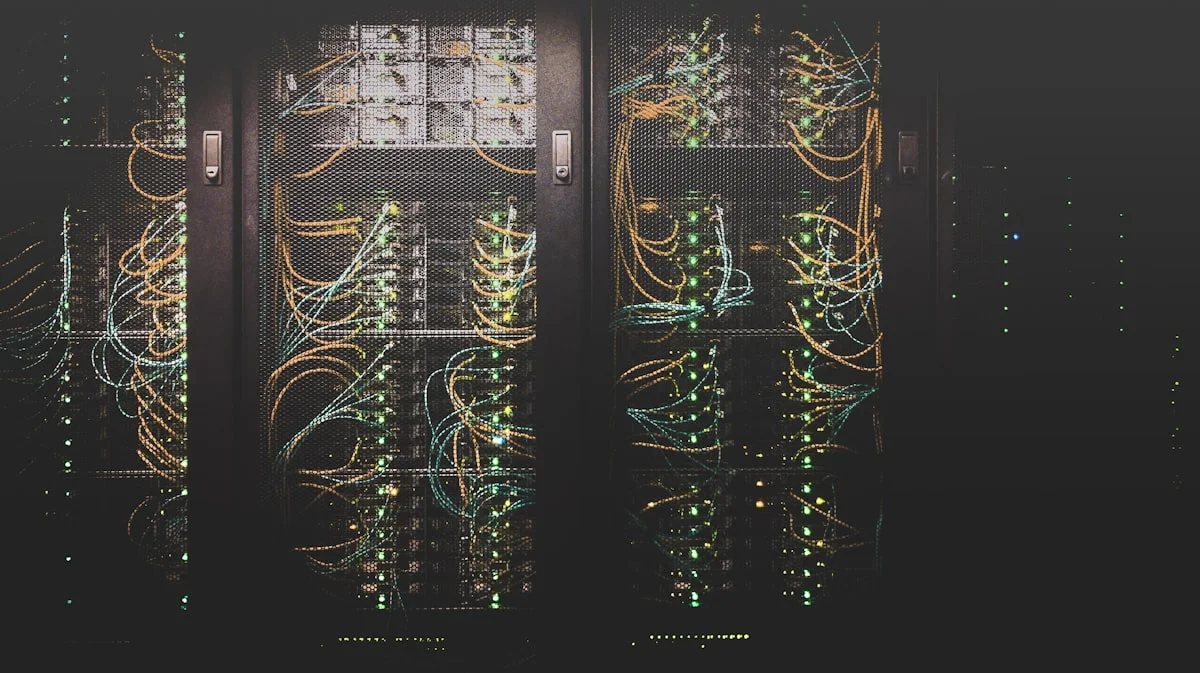
TikTok announced a €1 billion investment in a second Finnish data center on April 8, 2026, doubling down on the Nordic country as the anchor of its European infrastructure strategy. The facility in Lahti — 100km northeast of Helsinki — will start at 50 megawatts of capacity and scale to 128 MW, becoming operational by 2027. It follows a separate €1 billion Kouvola data center announced in 2025, due online by end of 2026. Both sites sit inside Project Clover, TikTok’s decade-long €12 billion European data sovereignty initiative. The timing is deliberate: ByteDance escaped a US ban by months in January, Europe’s Digital Services Act is actively enforced, and Greece just announced a social media ban for under-15s. TikTok’s answer to all of it is the same — build infrastructure close to regulators and keep building.
Direct Answer: What is TikTok’s Project Clover and what is it doing in Finland? Project Clover is TikTok’s €12 billion ($14B) European data sovereignty initiative, designed to store and process the personal data of more than 200 million European users entirely on European soil under EU-governed infrastructure. On April 8, 2026, TikTok announced a second €1 billion data center in Lahti, Finland — following a first Finnish facility in Kouvola announced in 2025. The Lahti facility will launch at 50 megawatts and scale to 128 MW, operational by 2027. NCC Group, an independent cybersecurity firm, oversees and monitors all Project Clover data controls. The initiative covers European TikTok user data currently held across Norway, Ireland, and the United States — Project Clover’s goal is to eliminate the US storage component entirely and migrate all EU data to European facilities.
Why Finland, Why Now
Finland has become the dominant destination for European hyperscale data center investment, and TikTok’s doubling down on two billion-euro facilities in the country is the clearest signal yet of why.
The physical advantages are real. Finland’s cold climate dramatically reduces cooling costs — the single largest operating expense in a data center. Renewable hydropower and wind provide low-carbon electricity at stable prices. The country’s data center market is projected to grow from 0.74 thousand MW in 2025 to 2.97 thousand MW by 2030, a compound annual growth rate of 32%. Finland’s total data center pipeline now reportedly exceeds 20 planned facilities representing €13 billion in value and 1.3 gigawatts of capacity, according to the Finnish Data Center Association.
The regulatory advantages are significant. Finland’s GDPR compliance framework is robust, its regulatory environment stable, and unlike Ireland (which has faced grid capacity constraints and rising energy costs), Finland has room to accommodate hyperscale expansion without infrastructure bottlenecks.
The timing relative to TikTok’s US situation. ByteDance narrowly avoided a US app store ban in January 2026 after months of brinkmanship over data access concerns. The structural vulnerability of having European user data stored partially in the United States — where US law enforcement can access it under the Stored Communications Act — was the core issue. Project Clover, and specifically the Finnish facilities, are the infrastructure answer: move EU data to EU soil entirely, eliminating the US access question.
The DSA enforcement reality. The EU Digital Services Act has been in full enforcement since 2024. TikTok, as a designated Very Large Online Platform (VLOP), faces the most stringent obligations — including algorithmic transparency, risk assessments, and data access requirements for researchers. Having European user data on European infrastructure, overseen by a European cybersecurity firm (NCC Group), is both a regulatory compliance strategy and a public relations defence.
What Project Clover Actually Involves
Project Clover is not just a data localization exercise. It is a comprehensive governance architecture:
Infrastructure layer: Four European data center sites — Norway, Ireland, Kouvola (Finland, online end-2026), and Lahti (Finland, online 2027). The goal is to process and store all 200 million European users’ data exclusively on these European sites, eliminating the current US storage component.
Access control layer: TikTok has implemented “Europe Gateway” — a system that controls and logs access to European user data by TikTok employees globally, including at ByteDance’s headquarters in Beijing. Any access to European user data from outside the EU must pass through Europe Gateway controls.
Independent oversight layer: NCC Group, a publicly listed UK cybersecurity firm, has been engaged to independently verify TikTok’s data controls, monitor data flows in real time, and report anomalies to European regulators. In 2026, NCC Group’s oversight work under Project Clover received a Security Excellence Award for Security Project of the Year from the trade publication Computing.
Technical segregation: European user data is being progressively migrated to separate technical infrastructure, with cryptographic controls designed so that ByteDance employees in China cannot access it — at least within the systems architecture.
The Sovereignty Question That Project Clover Cannot Fully Answer
For readers who care about genuine data sovereignty, Project Clover deserves critical scrutiny alongside the infrastructure announcements.
The ByteDance parent company problem. TikTok is owned by ByteDance, a Chinese company subject to China’s National Intelligence Law (2017), which requires Chinese companies to support national intelligence work when requested by the state. No matter how sophisticated Project Clover’s European architecture is, the fundamental question of whether ByteDance could be compelled by Chinese authorities to provide access to European user data — bypassing Europe Gateway and NCC Group monitoring — has not been definitively answered by any independent technical audit.
The US Oracle restructuring. ByteDance restructured TikTok’s US operations with Oracle taking a majority stake in early 2026, specifically to avoid the US ban. The relationship between the Oracle-controlled US entity and ByteDance’s continuing operations remains complex. The data architecture answer for Europe (Project Clover) is cleaner than the US situation, but the corporate structure creates ongoing questions.
What NCC Group can and cannot verify. NCC Group monitors data flows through Project Clover’s systems. What it cannot verify is whether there are other technical channels for data access that exist outside those systems, or whether the technical architecture would hold against a Chinese government directive. This is not a criticism of NCC Group’s competence — it is a structural limitation of any third-party oversight arrangement with a company subject to a foreign government’s intelligence requirements.
The honest sovereignty score (41/100). TikTok’s data stored in European data centers, governed by EU law, overseen by an independent cybersecurity firm, is meaningfully better for European users than data stored in the US with no European oversight. But it is not equivalent to data controlled by a European-headquartered company with no foreign state intelligence obligations. The infrastructure is European; the ultimate corporate control is not.
The Competitive Landscape: Finland as a Tech Sovereignty Destination
TikTok is not alone in choosing Finland. The country has become a focal point for data center investment by companies seeking stable, low-cost, renewable-energy-backed European infrastructure:
Microsoft has multi-billion euro data center investments in Finland, part of its European AI infrastructure expansion.
Google operates data centers in Hamina, Finland — one of its oldest European facilities, specifically cited for the cold climate and renewable energy access.
DayOne — a data center developer that emerged from the international division of Chinese firm GDS — is constructing a 128 MW campus in Lahti, the same city as TikTok’s second facility. DayOne is also reportedly an investor in Hyperco’s Kouvola project, which is building TikTok’s first Finnish site.
This creates a pattern worth noting: Chinese-affiliated data center infrastructure is being built in Finland as the physical home for European user data that Chinese-owned platforms are trying to demonstrate is safely stored in Europe. The NCC Group oversight framework addresses this concern structurally, but the geographic concentration of Chinese-adjacent data center investment in a single Nordic country may draw regulatory attention as Project Clover scales.
What This Means for the European Tech Regulation Cycle
TikTok’s infrastructure bet reflects a broader strategic reality facing every major tech platform operating in Europe: the cost of European market access now includes significant data localization infrastructure investment.
The DSA compliance cost: Very Large Online Platforms under the DSA face annual audits, transparency reports, risk assessments, and data access obligations for researchers. The incremental cost of maintaining European data in European infrastructure, with independent oversight, is now a line item in the operating budget of every major social platform.
The regulatory leverage this creates for Europe: By making platforms invest billions in European data infrastructure, European regulators create a structural deterrent against withdrawal. A platform that has committed €2 billion in Finnish infrastructure cannot easily exit the EU market — the sunk cost creates regulatory leverage that pure enforcement cannot. This is arguably the most effective form of data sovereignty regulation: making compliance capital-intensive enough that non-compliance becomes a strategic rather than a legal question.
The child safety intersection: Greece’s April 8 announcement of an under-15 social media ban with DSA fine enforcement, on the same day TikTok announced the Lahti data center, illustrates the regulatory pressure TikTok is navigating simultaneously. Having EU-based data infrastructure makes compliance with future age-verification mandates technically feasible in a way that US-stored data would complicate.
Key Dates and Facts
| Item | Detail |
|---|---|
| Announcement date | April 8, 2026 |
| Location | Kiveriö district, Lahti, Finland |
| Initial capacity | 50 MW |
| Maximum capacity | 128 MW |
| Operational | 2027 |
| Investment | €1 billion ($1.16B) |
| Project umbrella | Project Clover (€12B total) |
| EU users covered | 200+ million |
| Independent oversight | NCC Group |
| First Finnish site | Kouvola (online end-2026) |
| Other EU sites | Norway, Ireland |
FAQ
What is TikTok Project Clover? Project Clover is TikTok’s €12 billion, decade-long European data sovereignty initiative, designed to store and process all European user data exclusively in European data centers. It covers 200 million European users and is independently overseen by cybersecurity firm NCC Group.
Why is TikTok building data centers in Finland specifically? Finland offers cold climate (reducing cooling costs), reliable low-carbon renewable energy, stable regulation, and lower operating costs than Ireland or Germany. Finland’s data center market is growing at 32% CAGR and is one of Europe’s most active for hyperscale investment.
Is TikTok’s European data safe from Chinese government access? Project Clover establishes technical architecture designed to segregate European user data with access controlled by Europe Gateway. NCC Group independently monitors data flows. However, ByteDance remains subject to China’s National Intelligence Law, and no independent technical audit has confirmed that the architecture would prevent all forms of state-compelled access. The sovereignty score is meaningful but not absolute.
Does Project Clover mean TikTok is compliant with GDPR? Data localisation on EU soil is a necessary but not sufficient condition for GDPR compliance. Compliance requires appropriate technical and organisational measures, subject rights fulfilment, consent frameworks, and data minimisation. Project Clover addresses the data residency component specifically.
Related Articles
- Greece Bans Social Media for Under-15s From 2027
- India Bans Hikvision and Dahua CCTV: The Surveillance Sovereignty Line
- Best VPN 2026: Mullvad vs ProtonVPN vs NordVPN — Sovereignty Ranked
- What Is Zero-Knowledge Encryption? Plain-English Guide 2026
- Signal vs WhatsApp vs Telegram 2026: Which Actually Protects You?
Sources & Further Reading
- Privacy Guides — Community-vetted privacy tool recommendations
- EFF Surveillance Self-Defense — Practical guides to protecting your digital privacy
- Electronic Frontier Foundation — Advocacy and research on digital rights