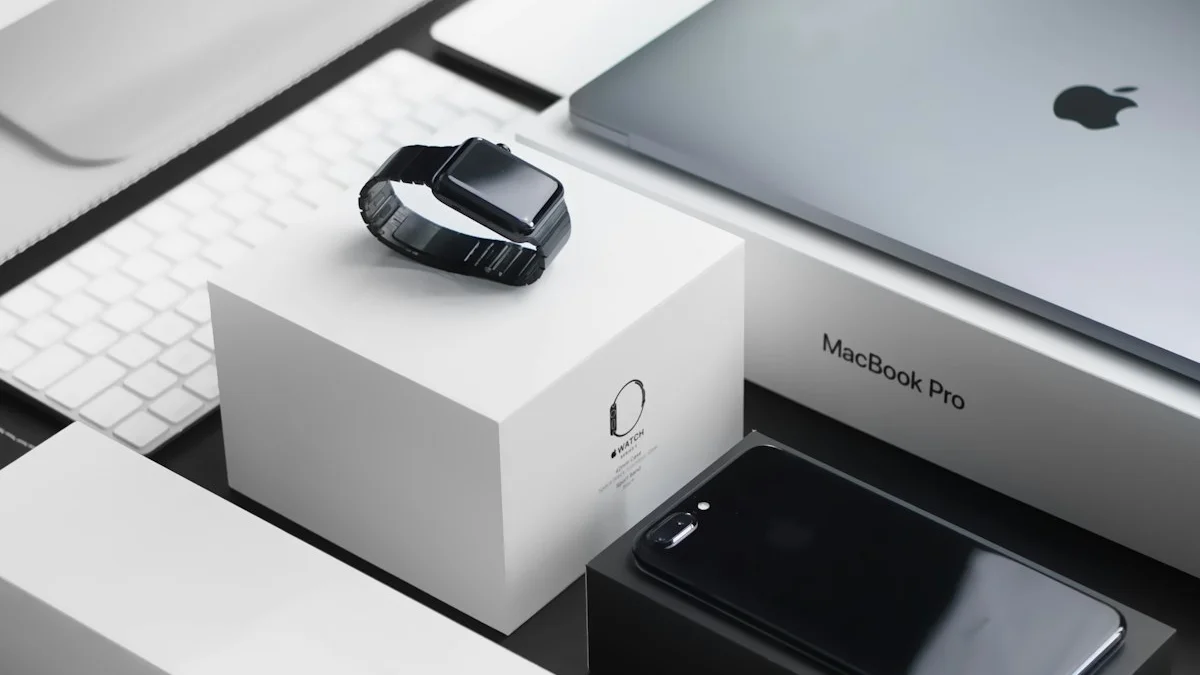
Apple at 50: The Silicon Valley Legend Confronts its Next Big Challenge: AI
On April 1, 2026, the company that started in a California garage half a century ago celebrated its 50th anniversary. Apple, now a $3.6 trillion behemoth, has spent five decades redefining how we use technology—from the Macintosh to the iPhone.
But as the candles are blown out, a new and daunting challenge looms: Artificial Intelligence.
Half a Century of Cultural Change
Steve Jobs and Steve Wozniak founded Apple with a radical idea: that technology should be personal. Over the last 50 years, that belief has changed the world.
- 1984: The Macintosh made computing accessible to the “rest of us” with its mouse and icon-based interface.
- 2001: The iPod and iTunes revolutionized how we consume music.
- 2007: The iPhone reshaped human communication, becoming the most successful consumer electronics product in history.
- 2026: Apple enters its sixth decade with a base of over 2 billion active devices, but faces a market that is increasingly demanding “Agentic AI.”
The “AI Gap”: Catch-up or Calculated Wait?
For the first time in years, Apple appears to be trailing its rivals. Microsoft has integrated Copilot into every corner of its ecosystem, Google has embedded Gemini into Android, and OpenAI’s models have become the de facto standard for LLMs.
Apple’s own digital assistant, Siri, has been criticized for lagging behind. Reports suggest that a major AI-driven upgrade for Siri was delayed, leading Tim Cook to turn to Google for help—a move that some analysts see as a rare stumble for a company that prides itself on vertical integration.
The Sovereign Advantage: Privacy as a Product
However, Apple’s “easing into” AI might be more calculated than it looks. While other companies have raced to the cloud to process data, Apple has been quietly building the hardware for Local-First AI.
The M-series and A-series chips in modern Apple devices are among the most capable in the world for on-device neural processing. By focusing on AI that runs on your iPhone or Mac—rather than in a centralized data center—Apple can offer something its competitors cannot: AI with true privacy.
As Carolina Milanesi of Creative Strategies noted: “They are the ones that always seem able to create something so simple that users just fall in love with it.”
What the Next 50 Years Look Like
Apple’s future isn’t just in smartphones. We are already seeing the integration of AI into:
- AirPods: Using sensors and software to provide real-time audio intelligence.
- Vision Pro: Lessons from spatial computing are feeding into the development of AI-powered smart glasses that could one day rival Meta’s offerings.
- Sovereign Hardware: Apple is uniquely positioned to drive the widespread adoption of personalized AI that respects Digital Sovereignty.
The Vucense Perspective
At Vucense, we celebrate Apple’s commitment to privacy, but we also recognize the risk of Vendor Lock-in. While Apple’s on-device AI is more sovereign than a cloud-based model, it is still part of a closed ecosystem.
As we look toward the next 50 years, the goal for sovereign users should be to take the best of Apple’s hardware and combine it with open-source, interoperable AI models. The “Year of Truth” for Apple will be when we see if they allow their AI to talk to the rest of the world—or if they keep it locked inside the “Walled Garden.”
Happy 50th, Apple. Now, show us what you can do with AI.
Stay secure. Stay sovereign.
Frequently Asked Questions
What is the difference between narrow AI and AGI?
Narrow AI (like GPT-4 or Gemini) excels at specific tasks but cannot generalise. AGI can reason, learn, and perform any intellectual task a human can. As of 2026, we have narrow AI; true AGI remains a research goal.
How can I use AI tools while protecting my privacy?
Run models locally using tools like Ollama or LM Studio so your data never leaves your device. If using cloud AI, avoid inputting personal, financial, or sensitive business information. Choose providers with a clear no-training-on-user-data policy.
What is the sovereign approach to AI adoption?
Sovereignty in AI means owning your inference stack: using open-weight models, running on your own hardware, and ensuring your data and workflows are not dependent on a single vendor API or cloud infrastructure.
What to do next
Apple’s AI challenge is ultimately an execution problem: the company has the on-device hardware and the privacy architecture, but the model quality has lagged. The practical opportunity for Apple-platform developers is to build workflows that exploit on-device inference now, so they are positioned to benefit as the capability gap closes.
How to apply this
For teams evaluating Apple’s on-device AI direction, the practical exercise is to inventory every AI feature you currently use from a cloud provider and ask whether it would work equally well with a model running in the Neural Engine. The ones that would are migration candidates that will reduce your API exposure as on-device quality continues to improve.
What this means for sovereignty
The key insight from Apple’s 50th anniversary AI challenge is that on-device intelligence is no longer a marketing positioning — it is a genuine architectural differentiator. Apple’s bet is that the most durable AI products are those that keep inference local, keep data under the user’s control, and treat privacy as a design constraint rather than a compliance checkbox. Whether that bet pays off commercially depends on whether consumers increasingly value control alongside capability.
Sources & Further Reading
- MIT Technology Review — AI Section — In-depth coverage of AI research and industry trends
- arXiv AI Papers — Pre-print research papers on AI and machine learning
- EFF on AI — Civil liberties perspective on AI policy